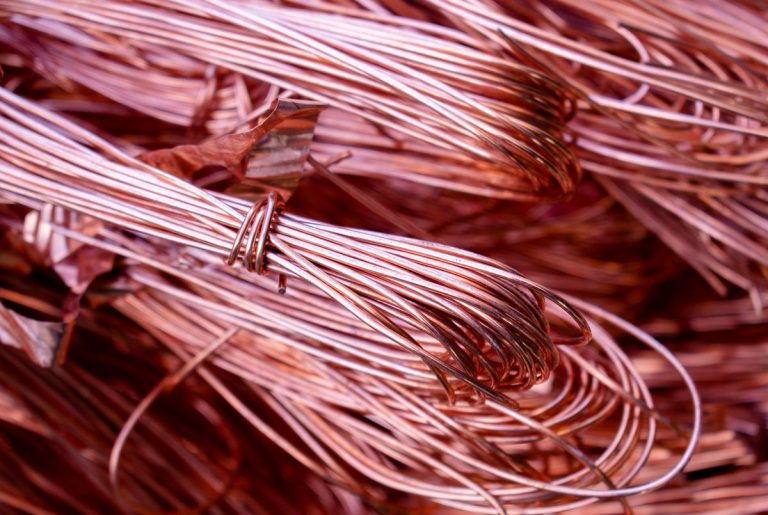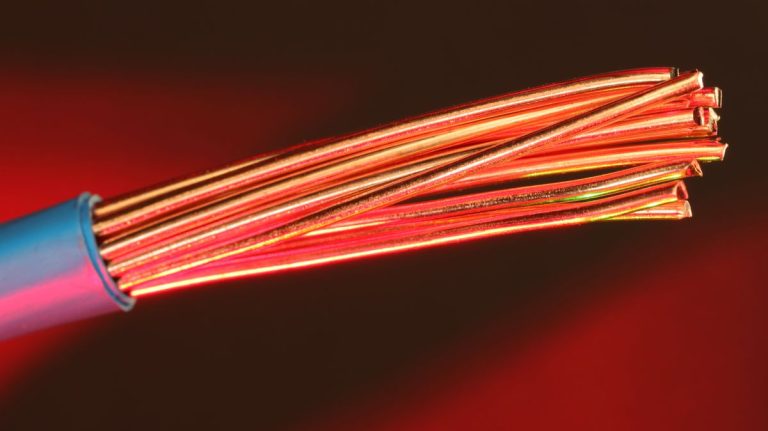
Copper or aluminium is one of the main questions when choosing a cable. Both metals have been used in electrical engineering for decades, but their properties differ significantly — and so do their areas of application. Let us look at how a copper conductor differs from an aluminium one, the advantages and disadvantages of each, and what to choose for a specific task.
Electrical conductivity
The key parameter of a conductor is its resistivity. For copper it is about 0.017 Ω·mm²/m, for aluminium about 0.028 Ω·mm²/m. In other words, the conductivity of aluminium is only 60–65% of that of copper. In practice this means that to carry the same current an aluminium conductor must have a larger cross-section than a copper one: roughly, 2.5 mm² copper corresponds to 4 mm² aluminium.
Heating and heat dissipation
Copper not only conducts current better but also dissipates heat more effectively: its thermal conductivity is about twice that of aluminium. As a result, under load an aluminium conductor heats up more. The statistics are unforgiving: fires caused by faults in aluminium wiring occur much more often than in networks with copper conductors.
Weight
The main advantage of aluminium is its low weight. For the same volume it is several times lighter than copper, and an aluminium cable line is 30–50% lighter than a copper one. That is why aluminium is indispensable on overhead power lines and long runs, where the weight of the conductor is critical.
Mechanical strength and flexibility
Copper is more ductile and durable: a copper conductor withstands about 50 bends without losing its properties, while an aluminium one breaks after roughly 12. Aluminium is more brittle, so it performs worse in places with frequent bending and vibration.
Corrosion and chemical resistance
In air, aluminium quickly becomes covered with an oxide film. It protects the metal but has a high resistance, which degrades contacts in connections. Copper is more corrosion-resistant and does not oxidise as actively, so copper contacts are more reliable and durable.
Cost
Aluminium is noticeably cheaper: a kilogram of copper costs about three times more. Taking into account the larger cross-section of an aluminium conductor, the saving is somewhat smaller, but for large cross-sections and long lines aluminium remains the more economical solution.
Comparison table
| Parameter | Copper | Aluminium |
|---|---|---|
| Resistivity, Ω·mm²/m | ~0.017 | ~0.028 |
| Conductivity (vs copper) | 100% | ~60–65% |
| Thermal conductivity | high | about half as high |
| Weight (same cross-section) | heavier | 30–50% lighter |
| Bending endurance | ~50 cycles | ~12 cycles |
| Corrosion resistance | high | lower (oxidises) |
| Price | higher | about three times lower |
Where each is used
- Copper — indoor wiring of houses and apartments, socket and lighting circuits, critical connections, flexible cables. Under current standards, indoor wiring in new buildings is made specifically with copper.
- Aluminium — building inputs, overhead and cable lines of large cross-section (from 16 mm²), long trunk lines where weight and cost matter.
Important: do not connect copper to aluminium directly
Directly twisting copper and aluminium conductors together is unacceptable. At the point of contact between two dissimilar metals the resistance increases over time, the joint overheats and breaks down — a direct path to a short circuit or fire. Copper can be connected to aluminium only through terminal blocks, special clamps or transition sleeves that prevent direct contact between the metals.
Conclusion
There is no universal winner: copper wins in conductivity, reliability and durability, aluminium in weight and price. For household and critical wiring choose copper; for powerful inputs and long large-cross-section lines aluminium is economically justified. To select the best option for your project, contact the specialists of TD Odeskabel — we will help with the calculation and choose a cable for your specific task.