A low-quality or counterfeit cable is not only wasted money but also a real fire hazard. Most often manufacturers “save” on the most important thing: they understate the conductor cross-section or pass off copper-clad aluminium as copper. We explain the signs by which you can tell a quality cable from a fake before installation.
The main trick — an understated cross-section
The most common way to make a cable cheaper is to make the conductor thinner than stated on the marking. There are samples labelled “1.5 mm²” whose real cross-section is only 0.8 mm². Such a wire will overheat under load.
Checking is not difficult: measure the conductor diameter with a caliper (very thin ones — with a micrometer) and calculate the area using the formula S = π × r², where r is the conductor radius. If you have no micrometer, tightly wind 10 turns of wire around a pencil, measure the width of the winding and divide by the number of turns — you will get the diameter of one conductor.
Copper or “copper-clad” aluminium
Another common fake is coating an aluminium or even steel conductor with a thin layer of copper and passing it off as copper. You can recognise the deception by several signs:
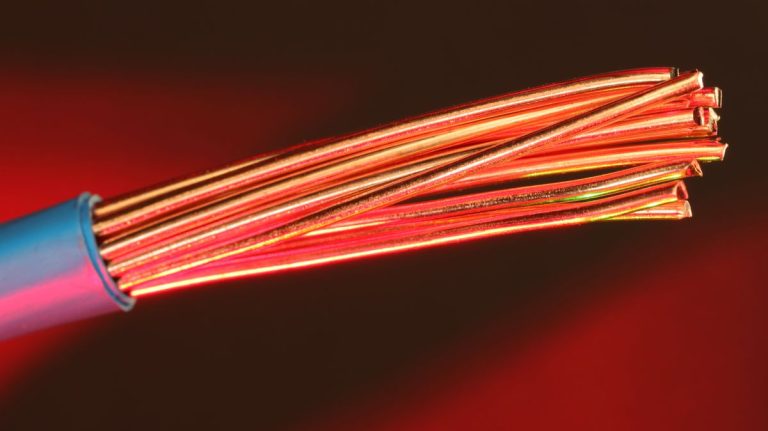
- Colour of the cut. Real copper has a reddish-golden cut; copper-clad aluminium or steel shows a silvery-white metal inside.
- Flexibility. Bend the conductor several times: copper stays ductile, while aluminium or steel breaks quickly.
- Weight. Copper is noticeably heavier than aluminium — a suspiciously light coil may indicate a fake.
Insulation quality
The insulation of a quality cable is uniform, sufficiently thick and elastic. It does not crack when bent and fits tightly around the conductor. The marking on the sheath must be clear and durable. Thin, brittle insulation with a blurred print is a reason to refuse the purchase.
GOST or TU
Pay attention to the standard the cable is made to. Products made to GOST / DSTU comply with the full regulatory requirements for cross-section and materials. Manufacturing to TU (technical specifications) allows the maker to set its own parameters — sometimes with a legally reduced cross-section. This is not always a fake, but read the characteristics carefully.
Marking, label and certificates
- Certificate of conformity. Buy cable with quality documents — without them the stated characteristics are not confirmed by anything.
- Label on the coil. Genuine products have a label with the manufacturer’s name, type, cross-section and length. For example, Odeskabel cable is usually supplied in 200 m coils.
- Length in the coil. An understated length is another way to cheat, so check the actual footage against the label.
Checklist before buying
- the conductor cross-section matches the marking (checked with a caliper);
- the conductor cut has the right colour (copper — golden-red);
- the conductor is ductile and does not break when bent;
- the insulation is thick, elastic, with clear marking;
- there is a certificate of conformity and a manufacturer’s label;
- the cable is from a well-known factory with a reputation.
Conclusion
The most reliable way not to run into a fake is to buy cable from trusted suppliers who work directly with factories and provide a full set of documents. TD Odeskabel sells certified products from Ukraine’s leading cable factories — get in touch, and you will receive a cable with guaranteed characteristics and quality.