When it comes to the fire safety of electrical wiring, two different concepts are often confused — “flame-retardant” and “fire-resistant” cable. In fact these are different classes of product that solve different tasks. Let us look at how cables that do not propagate flame differ from fire-resistant ones, what the indices нг, LS, HF and FR mean, and where each type is used.
Two different tasks
There are two separate tasks in the fire safety of a cable line:
- not to spread fire — so that the ignition of one cable does not pass to the bundle and cause a large-scale fire;
- to keep working in fire — so that a critical line (for example, a fire alarm) keeps operating even during a fire.
The first task is solved by flame-retardant cables (index “нг”), the second by fire-resistant cables (index “FR”).
Flame-retardant cables
Such cables can burn themselves but do not support the spread of flame along the route and within a bundle. The degree of their fire safety is specified by additional indices:
| Index | Meaning |
|---|---|
| нг (ng) | does not propagate flame in a bundle |
| нг-LS | Low Smoke — reduced smoke and gas emission |
| нг-HF | Halogen Free — does not release corrosive halogens |
| нг-LSHF (LSZH) | combination: little smoke and halogen-free |
The less smoke and toxic gases a cable emits, the safer the evacuation of people. That is why the LS and HF versions are used in places with large numbers of people.
Fire-resistant cables (FR)
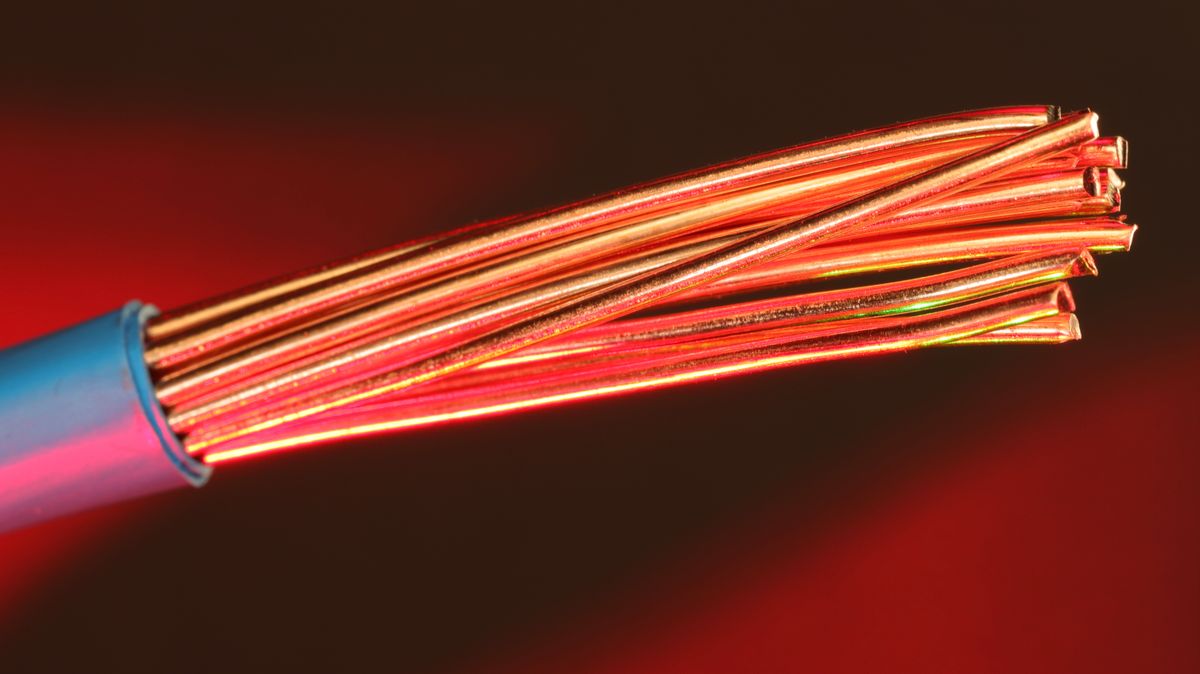
A fire-resistant cable does not merely resist the spread of fire but keeps working during a fire for a defined time. This is achieved by a special barrier — a mica tape is wound around the copper conductors. Mica does not burn, withstands high temperatures and insulates the conductor even when the main insulation has already burned away. Thanks to this the line keeps carrying current and signal.
The fire-resistance index is combined with others: for example, ВВГнг-FRLS — a cable that is flame-retardant, with low smoke emission and fire-resistant.
The key difference
The main thing to remember:
- нг — limits the spread of fire but eventually fails in flame;
- FR — keeps the line working in fire for a set time.
Standards and tests
Fire-safety characteristics are confirmed by international standards:
- IEC 60332 — non-propagation of flame of a single cable and in a bundle;
- IEC 61034 — smoke emission during combustion;
- IEC 60754 — corrosivity and amount of gases (halogens);
- IEC 60331 — retention of cable operability under fire conditions (fire resistance).
Where they are used
- нг and нг-LS — residential buildings, offices, general power supply, internal power networks and ordinary wiring.
- нг-HF (LSZH) — places with large numbers of people and enclosed spaces: hospitals, schools, hotels, shopping centres, metro, high-rise buildings.
- FR (fire-resistant) — systems that must work during a fire: fire alarms, voice alarm and evacuation control, emergency lighting, smoke extraction, fire pumps and ventilation.
Conclusion
The choice between a flame-retardant and a fire-resistant cable depends on the task. For ordinary wiring the нг or нг-LS version is enough; for facilities with large numbers of people — HF (LSZH); and for fire-protection systems you specifically need FR fire-resistant cables with confirmed characteristics. To avoid mistakes with the choice and documentation, contact the specialists of TD Odeskabel — we will select a cable that meets the standards of your facility.