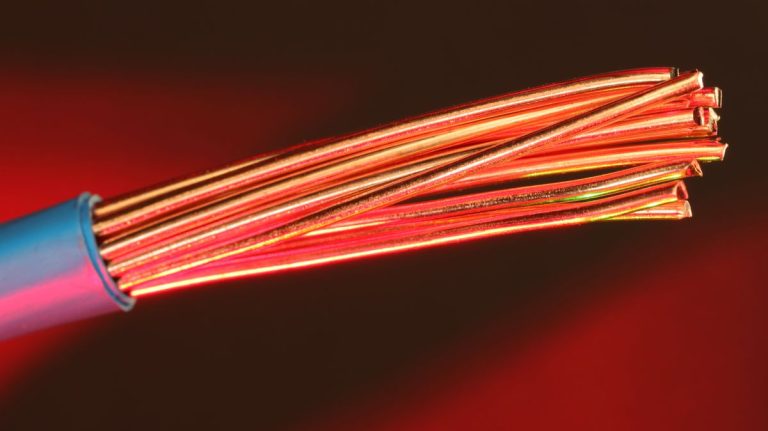
The letters and numbers on a cable sheath are not a random set of symbols but a precise “passport” of the product. From the marking you can find out the conductor material, the type of insulation and sheath, the number of cores, the cross-section and special properties (for example, whether the cable is flame-retardant). Let us look at how to read these designations and what the most common types mean.
The general marking principle
National marking is built on clear logic: the letters follow a certain order and describe the construction from the conductor outwards. In simplified terms the sequence is:
- conductor material (copper or aluminium);
- insulation material of the conductor;
- sheath material of the cable;
- design features (armour, flexibility, shape);
- numbers — the number of cores and the cross-section, sometimes the voltage.
What the letters mean
| Letter | Meaning |
|---|---|
| A (at the start) | aluminium conductor; if there is no A — the conductor is copper |
| В | PVC insulation or sheath |
| Р | rubber insulation |
| П | polyethylene insulation; also “wire” or “flat” |
| Г | absence of a protective covering (“bare”); in flexible cables — flexible |
| Б | armour of steel tapes |
| К | control cable or armour of round wires |
| Ш | cord |
The meaning of a letter depends on its position in the marking, so the designation should be read sequentially — from left to right.
Numbers in the marking
After the letters come numbers describing the construction. A notation like 3×2.5 means “3 cores with a cross-section of 2.5 mm² each”. If there is a neutral core of a smaller cross-section, it is indicated separately: 3×4+1×2.5. For power cables the marking may also state the rated voltage (for example, 0.66 or 1 kV).
Popular types and their decoding
| Type | Decoding |
|---|---|
| ВВГ (VVG) | copper conductors, PVC insulation, PVC sheath, no protective covering |
| АВВГ (AVVG) | same as VVG but with aluminium conductors |
| ВВГнг-LS | VVG that is flame-retardant, with low smoke and gas emission |
| ПВС (PVS) | connecting wire in PVC insulation, flexible copper conductors |
| ШВВП (ShVVP) | cord with PVC insulation and PVC sheath, flat |
| КГ (KG) | flexible cable in rubber insulation and sheath |
| СІП (SIP) | self-supporting insulated wire for overhead lines |
| ПВ-1 / ПВ-3 | installation wire in PVC insulation: solid and stranded conductor |
Suffixes after the name
Additional designations at the end of the marking describe special properties:
- нг (ng) — does not propagate flame in a bundle;
- нг-LS (Low Smoke) — low smoke and gas emission;
- нг-HF (Halogen Free) — no halogen emission during combustion;
- FR — fire-resistant, keeps working in flame;
- -П (-P) — flat shape;
- (ож) — single solid conductor.
A decoding example
Take the common type ВВГнг-LS 3×2.5. We read: copper conductors (no letter A), PVC insulation (first В), PVC sheath (second В), no protective covering (Г), flame-retardant with low smoke emission (нг-LS), 3 cores with a cross-section of 2.5 mm². This is one of the most popular cables for indoor wiring.
Conclusion
The ability to read markings helps you avoid mistakes in your choice and not overpay for unnecessary properties. If you are unsure which type suits your site, contact the specialists of TD Odeskabel — we will advise the correct designation and select a cable for your specific operating conditions.